
Seasonal checklists
Draught Proofing Your Newcastle Home Before Winter
Doors, windows, loft hatches and letterboxes: a practical guide to stopping draughts in your Newcastle home without blocking the ventilation it needs.
Neat, draught-sealed cat and small dog flaps fitted to doors, panels and walls across Newcastle.
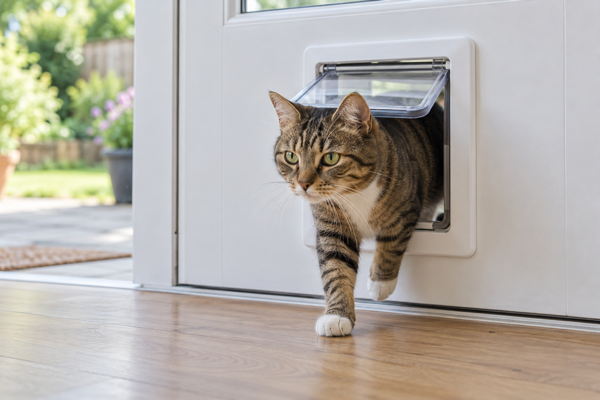
Getting up at 6am to let the cat out soon wears thin, and a badly cut flap that rattles in the wind or lets the neighbour's tom wander in is not much better. A properly fitted cat flap gives your pet their freedom while keeping your home warm and secure.
Andrew fits standard, magnetic and microchip cat flaps, plus small dog doors, for households across Newcastle, Gosforth, Heaton and North Tyneside. He works with solid timber doors, uPVC and composite door panels, and can advise on going through an external wall where a door is not suitable. Each flap is positioned at the right height for your pet, cut cleanly, fixed securely and sealed so it does not become a new source of draughts.
If you already have the flap, Andrew will fit it. If you are not sure which model suits your door thickness, he can point you towards options that will work. Where the door is glazed, he will explain the choices honestly, because cutting into a sealed glass unit is not something any handyman should attempt on site. Just send a photo of the door and the flap you have in mind and you will get a clear quote.
Most solid timber back doors are straightforward. Andrew measures the thickness first, because many flaps are designed for doors up to around 50mm and thicker doors need a tunnel extension.
uPVC and composite doors usually have a flat infill panel at the bottom that can be cut, or replaced with a pre-cut panel, depending on the door. Composite doors with a solid core need more care and the right tools, and Andrew will tell you up front if a replacement panel is the better route.
Glazed doors and double-glazed units cannot be cut once made. If the only sensible spot is glass, the answer is a new sealed unit made by a glazier with the hole already built in. Andrew can arrange this or advise you on what to order, then fit the flap once the new unit is in.
Microchip flaps only open for pets whose chip has been programmed in, which keeps out other cats and most wildlife. They need batteries, and they are a little bulkier than a basic flap, so the fitting position matters.
Andrew will fit the flap, check it opens and closes cleanly, and make sure the locking modes work before he leaves.
Not by cutting the existing glass, as sealed units cannot be cut once made. The proper way is a new sealed unit made by a glazier with the hole built in. Andrew can arrange that or tell you exactly what to order, then fit the cat flap into the new unit once it arrives. It takes a little longer, but it is the only safe option.
You can, and many people prefer to choose their own model. If you are unsure, send Andrew a photo of the door and its thickness and he can suggest flaps that will suit it. That avoids buying a flap that turns out to be too thin for the door or too large for the panel.
A well-fitted flap should not add much of a draught. Andrew cuts the hole to the correct size, seals the edges and makes sure the flap closes properly against its frame. Flaps with brush or magnetic seals perform better in exposed spots, which is worth thinking about on a windy Newcastle back step.
Often, yes. A wall installation goes through brick or block with a lined tunnel, so it takes longer than a door and depends on what is inside the wall. Andrew will look at photos first and check for pipes or cables before agreeing the position. It is a good option where the door is glazed or rented.
You will need your landlord's permission first. A common approach is replacing the door panel with a pre-cut one and keeping the original, so it can be refitted when you move out. Andrew is happy to talk this through with you or your landlord before any work is done.
Tell Andrew what needs fixing – send a couple of photos and you’ll get a clear quote. One visit can sort several small jobs.
Doors, windows, loft hatches and letterboxes: a practical guide to stopping draughts in your Newcastle home without blocking the ventilation it needs.
The common repairs to sort between tenants, how to use inventory photos, and tips for student lets in Jesmond and Heaton. A practical checklist for landlords.
Brick, block, plasterboard or a Tyneside flat partition wall? How to tell what your wall is made of, which bracket suits it and how to tidy the cables safely.
Black mould, gaps and peeling silicone are signs your bath or shower needs resealing. Learn why mould returns, how long sealant takes to cure and when to worry.
Storm damage to your shed roof? How to decide between a patch repair and full re-felting, plus what to check on boards, doors and the base.
Curtain poles, blinds, TV mounting, flatpack and furniture anchors: the handyman jobs worth booking in your first week after moving in.