
Seasonal checklists
Draught Proofing Your Newcastle Home Before Winter
Doors, windows, loft hatches and letterboxes: a practical guide to stopping draughts in your Newcastle home without blocking the ventilation it needs.
Old, mouldy sealant stripped out and replaced with a neat, watertight bead that looks fresh.
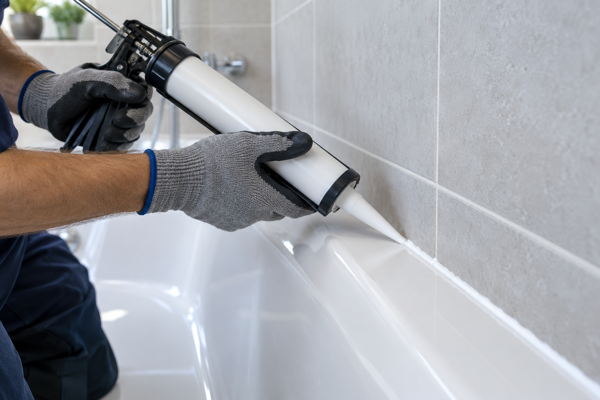
Silicone sealant around a bath or shower does an important job. It stops water running down behind the bath panel or tray, where it can rot floorboards, stain the ceiling below and cause damp. When sealant turns black with mould, peels away or cracks, it is not just unsightly. It can be letting water through every time someone has a shower.
Handy Andrew reseals baths, shower trays, basins and kitchen worktops for homeowners and landlords across Newcastle, Jesmond, Heaton and North Tyneside. The key to a lasting job is preparation: all of the old sealant is removed, the joint is cleaned and dried, and the right sanitary silicone is applied in a smooth, even bead.
Resealing is a quick job that makes a tired bathroom look far cleaner. It suits anyone who has tried cleaning mould out of sealant without success, landlords preparing a property for new tenants, and homeowners getting ready to sell. If Andrew spots signs of a bigger leak, such as a loose bath, cracked tray or failed grout, you will be told so it can be dealt with properly.
Black mould on sealant is common in bathrooms with limited ventilation, especially in older Newcastle terraces and flats with small windows. Mould grows into the silicone itself, which is why bleach and scrubbing only lighten it for a while. Once it is inside, the only real fix is to cut it out and start again.
Sealant also fails when it has been applied over old silicone, onto a damp surface or across a gap that moves. Acrylic baths flex when they fill with water, so if the bath was sealed when empty, the bead can tear. Andrew can fill the bath with water before sealing to allow for that movement. Improving ventilation, using an extractor fan and wiping the joint after showers all help new sealant stay cleaner for longer.
New silicone needs time to cure before it gets wet. Andrew will tell you how long the particular product needs, which is commonly around a day, though it varies with temperature and humidity. Using the shower too soon can leave the bead soft or marked.
Once it has cured, a few simple habits help it last:
If mould returns quickly, the room may need better ventilation, which is worth looking at before the next reseal.
That is not recommended. New silicone does not bond properly to old sealant, and mould underneath will show through or keep growing. A proper reseal means removing the old bead completely, cleaning the surface and letting it dry. It takes a little longer but lasts much better.
It depends on the sealant used and the conditions in the room, but many sanitary silicones need around a day to cure fully. Andrew will tell you the time for the product used on your job. Using it too early can damage the finish or let water get behind it.
The usual causes are sealing over old silicone, sealing onto a damp surface, or the bath moving when filled. Acrylic baths flex quite a lot. Filling the bath before sealing and making sure it is properly supported underneath helps prevent cracking.
Yes. The joint between a worktop and wall, or around an inset sink, benefits from fresh sealant if the old bead is discoloured or peeling. It stops water getting into the edge of the worktop, which can cause swelling in laminate and chipboard.
Yes, it is one of the most noticeable small improvements. Fresh white sealant makes a bathroom look cleaner straight away, and buyers and tenants do tend to notice mould. It is often booked alongside other pre-sale touch-ups or end of tenancy repairs.
Tell Andrew what needs fixing – send a couple of photos and you’ll get a clear quote. One visit can sort several small jobs.
Doors, windows, loft hatches and letterboxes: a practical guide to stopping draughts in your Newcastle home without blocking the ventilation it needs.
The common repairs to sort between tenants, how to use inventory photos, and tips for student lets in Jesmond and Heaton. A practical checklist for landlords.
Brick, block, plasterboard or a Tyneside flat partition wall? How to tell what your wall is made of, which bracket suits it and how to tidy the cables safely.
Black mould, gaps and peeling silicone are signs your bath or shower needs resealing. Learn why mould returns, how long sealant takes to cure and when to worry.
Storm damage to your shed roof? How to decide between a patch repair and full re-felting, plus what to check on boards, doors and the base.
Curtain poles, blinds, TV mounting, flatpack and furniture anchors: the handyman jobs worth booking in your first week after moving in.